
Does your organization suffer from kakistocracy?
Does your organization suffer from kakistocracy? This intriguing term recently reappeared in the words of George Clooney, who publicly deplored the actions of the Trump government: "There is a very good word, kakistocracy, which refers to a country run by the least qualified people."
By l'équipe des Pointures
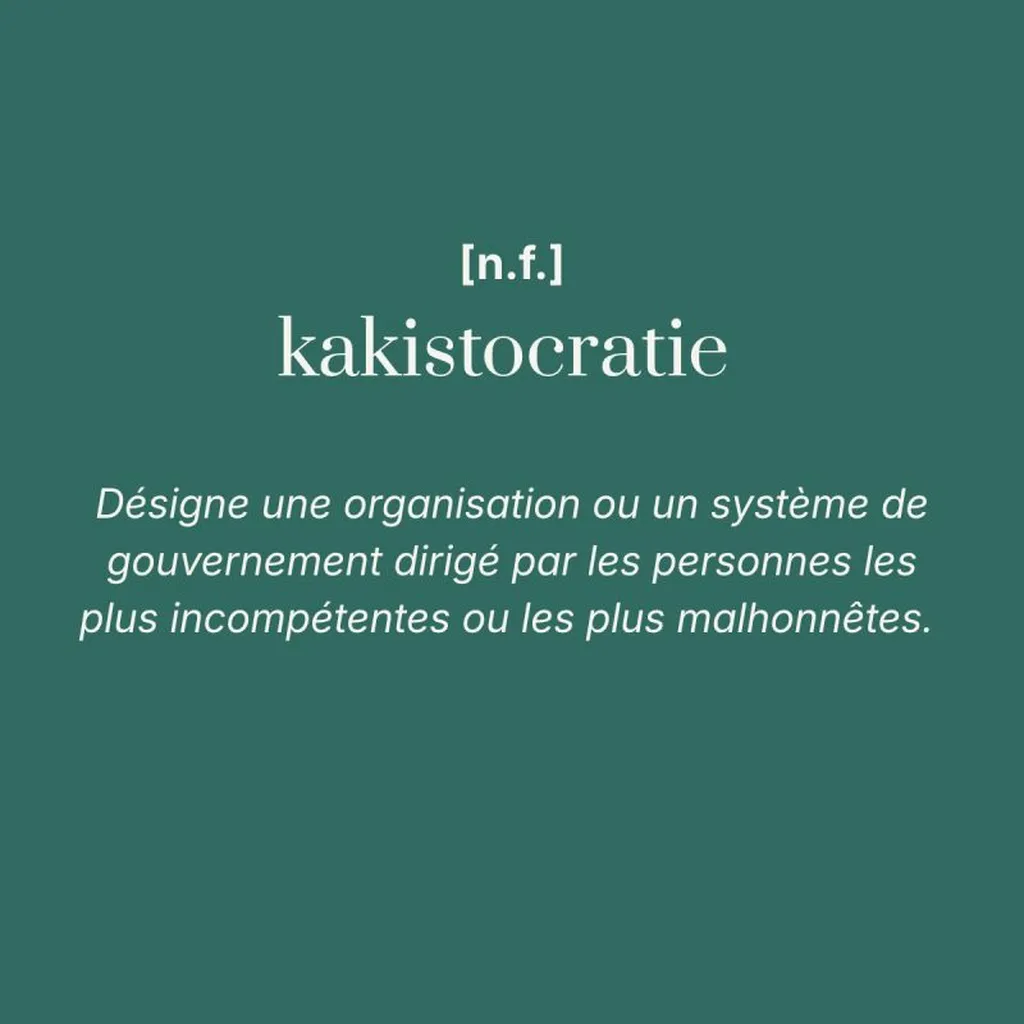
The Greek etymology provides the first clues to the deep meaning of the concept of kakistocracy. Kakistos is the superlative of kakos, which means "bad." Kratos relates to "power." Kakistocracy thus expresses the concept of "rule by the incompetent."
According to historians, the word first emerged in 1644 in England during a sermon by a supporter of King Charles I during the Civil War. Interestingly, this is not the first time the term has been linked to Donald Trump. On April 13, 2018, former CIA director John O. Brennan used it in a tweet addressed to the then 45th President of the United States: "Your kakistocracy is collapsing after its lamentable journey"!
The idea of kakistocracy is not exclusively reserved for the world of political decision-makers. With the advent of contemporary management theories, it has also found resonance within companies. In 2024, researcher Isabelle Barth worked to dissect this concept in a book entitled La Kakistocratie ou le pouvoir des pires (Kakistocracy or the Power of the Worst). Her analysis highlights several key points that contribute to the establishment of kakistocracy in businesses.
The first risk lies in the recruitment or promotion criteria within organizations. It is often linked to the elites from prestigious schools or the senior civil service, which create a potentially harmful insularity.
Another contributing factor is the managerial practices of some leaders. There are first the managers who block at all costs the promotion or mobility of certain team members, as these individuals are key to the balance and performance of the collective. Conversely, there is also the opposite attitude, which involves surrounding oneself exclusively with less capable and less challenging profiles who do not overshadow the leader and who may even become indebted and overly compliant, or who are appointed to important positions in return for their loyal services.
Many people have experienced this type of situation at least once in their professional lives. Unfortunately, it has become common to find oneself sidelined in one's career in favor of a leader's classmate or a manager who never debates.
However, the best way to combat kakistocracy remains embracing transparency. Establishing a culture of feedback where speech is liberated prevents impostors from thriving for long and endangering the collective. In short, it takes managerial courage rather than surrounding oneself with yes-men.